Bhubaneswar to have over 500 WiFi hot spots with 1800 access points

Bhubaneswar, the number one Smart City, has jumped the bandwagon of modern cities with Wi-Fi connectivity.

Through a project titled 'Bhubaneswar Me WiFi', the special purpose vehicle- Bhubaneswar Smart City Ltd (BSCL) aims to make the city accessible at key places. Chief minister today launched the project which will take off initially with 100 hotspots powered by 275 access points. Eventually, the city will have 518 hotspots with 1800 access points.

While one Wi-Fi hotspot would be able to handle as many as 150 users at a given point of time, the internet speed will be available at two megabytes per second (MBPS). Access to 250 MB of data will be free for any user on a given day.

“Today is a historic day for Bhubaneswar. The city of temples will have an IT backbone comparable to the best modern cities in the world. Bhubaneswar dot Me WiFi project will be a game changer for our youth to realize the heights of knowledge economy. Bhubaneswar will stamp its entry as a global smart city with 500 hotspots spanning entire city under this project,” said Patnaik.

"As part of my commitment for 3Ts- Technology, Transparency and Teamwork, in coming days, we will have similar free Wi-Fi facilities in all our corporations- Cuttack, Sambalpur, Berhampur, Rourkela and our JagannathDhaam-Puri," he added.

The City Wi-Fi project is part of the smart solutions of BSCL and also of the Master System Integrator (MSI). The project is executed by Honeywell, a company with IT expertise.

MSI will also include the Bhubaneswar Operations Centre, Intelligent Traffic Signal and Control System and Common Payment Card System so that all the IT-based systems and infrastructure across the Smart City would function in sync.

Today’s best deals: Instant Pot Black Friday sale, $19 WiFi extender, $20 earbuds, $19 egg cooker, more

The early Black Friday deals out there are so good this year that you might be able to completely finish your holiday shopping long before Black Friday actually arrives. Highlights from Monday’s roundup of the best daily deals out there includes the lowest price of 2018 on the world’s most popular Instant Pot, a one-day $30 discount on NuWave’s awesome air fryer, a new all-time low on the wireless camera that lets your smartphone see anywhere when you use the code HXROHDCT at checkout, the best-selling Wi-Fi range extender on all of Amazon for just $18.99, a SanDisk Ultra 128GB microSD card for just $22.50 (also an all-time low), the return of discounted Apple AirPods, Fire TV Stick refurbs for $30, popular Anker Bluetooth earbuds for $19.99, Dash’s perfect egg cooker for $19, a fast wireless charging pad for only $12, and so much more. Check out all of today’s top deals below.

Follow @BGRDeals on Twitter to keep up with the latest and greatest deals we find around the web.

BGR Deals content is independent of Editorial and Advertising, and BGR may receive a commission on purchases made through our posts.

WiFi or cellular data? IIT-B scientists offer a way to choose

Users of mobile data are always in a dilemma; what to choose — a WiFi or cellular network — for better data connectivity? Such questions may soon be a thing of the past if a team of researchers at the Indian Institute of Technology Bombay (IIT-B) has its way.

The scientists at IIT-B’s Electrical Engineering Department have come out with a set of algorithms for network service providers to efficiently manage the choice of network for mobile devices.

Today, WiFi is available in most public places, thanks to hotspots. Although generally WiFi provides higher data speed compared with cellular network and is cost-effective, data rate starts to drop as more people connect to a single hotspot. On the other hand, if the number of data connections increase in a cellular network, it may lead to voice call blocking. The next generation 5G communications technology tries to address these limitations of mobile telephony, said the IIT-B scientists in a statement.

“But at present, these limitations are for real. Currently, there is no coordination between a WiFi network and 4G network. The decision to choose between either of the two networks is taken by the user. Our algorithms make it possible for the operator to take over this job,” said Arghyadip Roy, a doctoral student with Abhay Karandikar, Professor, IIT-Bombay who recently took over as the director of IIT-Kanpur.

“The system that we have proposed on the other hand can give the network operator a chance to judiciously allocate better data transfer rates and quality of voice calls to the consumers,” Roy told BusinessLine. It provides a central controller that can be used by the operator to monitor the connections at each cell tower or WiFi access points and decide if a data or voice call should be served using mobile network or WiFi.

“Controlling the access networks through a central, cloud-based controller is the future of mobile networks. People want to have the entire picture of the network and make decisions based on that,” said IIT-B professor Prasanna Chaporkar, who along with Karandikar and Roy authored the paper which appeared in the IEEE journal Transactions on Vehicular Technology recently, in a statement.

The scientists said their idea was to find a way to make maximum utilisation of the system. That way, each user can get the best data rate possible while ensuring that the fraction of voice calls blocked stay within specified limits.

SparkLAN Launches WPET-236ACN (BT) & WUBT-236ACN (BT) Series 802.11ac Dual Band WiFi + Bluetooth Combo Half Mini PCIe / USB Module

Share on FacebookDigg thisTweet about this on TwitterShare on Google+Share on LinkedInPin on PinterestShare on RedditShare on StumbleUpon

Taipei, Taiwan, November 05, 2018 –(PR.com)– SparkLAN releases the newest 11ac USB and half mini PCIe combo card. Enjoy SparkLAN’s WUBT-236ACN (BT) and WPET-236ACN (BT) Dual-Band adapter. Using the latest 802.11ac wireless standard, WUBT-236ACN(BT) / WPET-236ACN(BT) is a highly integrated single-chip Wireless LAN (WLAN), Bluetooth USB module which supports 2 stream 802.11ac solutions with multi-user MIMO (Multiple-Input, Multiple-Output) wireless LAN (WLAN) and integrated Bluetooth 4.2. WUBT-236ACN (BT) is an integrated 2Tx2R WLAN MAC, baseband, and dual band RF in a single chip USB module. WUBT-236ACN (BT) / WPET-236ACN (BT) provides a cost effective solution for M2M (machine to machine) connectivity product/device; it can be easily integrated into the most familiar operation system (Android/Linux/Windows).

WUBT-236ACN (BT) 802.11ac/a/b/g/n 2Tx2R USB WLAN/BT module with various USB input format & internal printing or external RF antenna connector for high performance wireless LAN and Bluetooth device. WPET-236ACN (BT) 802.11ac/a/b/g/n 2Tx2R USB WLAN/BT module is a half mini PCI-e form factor with IPEX connector. It is designed to provide completely M2M connection & excellent cost performance with low power consumption and enhance the advantages of robust systems & applications.

SparkLAN provides leading wireless technology with unmatched support around the world. They have certified WUBT-236ACN (BT) / WPET-236ACN (BT) for FCC/IC/CE/MIC to reduce testing costs for their customers. SparkLAN provides driver support for operating systems such as Linux, Windows and Android. To further expedite the product development process, SparkLAN also provides additional services including custom driver, certification services.

Key Feature

– Support Multiple Operation Systems (Linux / Windows / Android) – Support 802.11ac 2×2, compliant with MU-MIMO. Operates in 2.4GHz and 5GHz frequency bands – Maximum data rates: 54Mbps in 802.11g, 300Mbps in 802.11n, 866.7Mbps in 802.11ac

– Type of form factor: USB or HMC

Company Information
Founded in 2002, SparkLAN is one of the worldwide leading wireless networking solution providers. Our product mix covers wireless embedded modules, and wireless networking devices, offering a comprehensive line of solutions for M2M connectivity in the highest growing broadband communication application. For more information, please visit www.sparklan.com.

Contact Information: SparkLAN Communications, Inc. Sharon Wang 886-2-2659-1880

Contact via Email


www.sparklan.com

Read the full story here: https://www.pr.com/press-release/769028

Press Release Distributed by PR.com


Source: PR.com

Virgin Media UK Trial Smart WiFi Upgrade for Broadband Routers

Tuesday, November 6th, 2018 (12:30 am) - Score 890

virgin media superhub 3 router

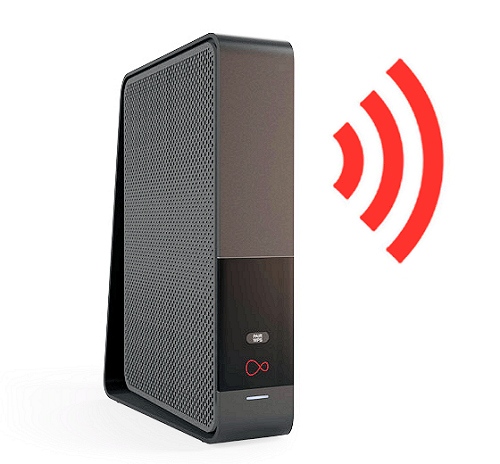
ISPreview.co.uk has learnt that cable ISP Virgin Media have recently started inviting selected customers to take part in a secret new “broadband trial” (VMBW2) for Smart Wi-Fi technology, which aims to boost the overall network performance and improve connectivity to WiFi enabled devices.

At this stage we don’t know a huge amount about what is being tested, although it comes in the form of a firmware upgrade for the operator’s Hub 3.0 (SuperHub v3) cable routers and from the information we’ve seen it appears to be an implementation of something similar to, or the same as, AirTime Fairness (ATF) technology.

ATF is a kind of congestion management feature that has been around in some, but not all, WiFi networks for years and it tends to be optional (i.e. routers may disable it by default). Essentially ATF is designed to better manage your wireless network airwaves / traffic between multiple users (being fair with the sharing of capacity), although it may also reduce the performance for some users (e.g. those on slow / old devices).

Modern WiFi networks are getting better at sharing capacity and managing “airtime” congestion, thus many people may not require ATF to be enabled. However some environments, particularly busy ones with lots of users and wireless networks or devices (especially if you have a mix of older/ slower WiFi devices and newer / faster ones), may find this to be a useful improvement when enabled.

A Virgin Media Spokesperson told ISPreview.co.uk:

“We are in the process of trialling a number of exciting features as part of our continued investment to improve connectivity in our customers’ homes. We’ll keep customers updated once we have more information to share.”

At this stage it’s unclear whether Virgin Media eventually intend to deploy the upgrade to all of their hubs (old and new) or even if they will enable it by default. Equally, being a trial, it’s possible that the so-called “Smart WiFi” feature may never see the light of day but that seems unlikely.

Nigeria: Fast, Free Google WiFi Could Transform Nigerians' Health

guest column

Abuja — Nigeria is the fifth country – and the first in Africa – to get Google Station super-fast Internet at selected locations.

Google Station has launched in Nigeria, bringing Internet speeds sixteen times faster than the country's average of 1.86 megabits per second. It's as if people who cycle to work are suddenly able to ride a bullet train.

But the initiative's free high-speed Internet connections are limited to designated shopping malls and the Murtala Mohammed Airport in Lagos State.

To make a real difference in the lives of Nigerians, the company should designate Google Station hotspots in public health facilities across the country. This would make Google Station a game-changer for health in Nigeria, where there are on average four doctors for every 10,000 people and where maternal and infant mortality is among the highest in the world.

Telemedicine – using digital technology for health-care delivery – is a proven means to fast-track quality and patient-centred healthcare. It can assist with training medical students and resident doctors, as well as for managing patients.

Telemedicine is one of the transformations that faster WiFi can enable

Nigeria has already glimpsed the benefits. Shell Nigeria deployed telemedicine to treat workers on its off-shore platforms and to support health-care providers who treat infants at the Obio Cottage Community Hospital in Port Harcourt [the capital and largest city of Rivers State in the oil-producing but impoverished Niger Delta area].

However, the expansion of telemedicine has been hampered by Nigeria's anemic 1.86Mbps Internet speed. The 30Mbps speed provided by Google Station would make operations seamless.

Google Station should quickly move beyond shopping malls to include medical schools, teaching hospitals and secondary healthcare facilities.

Google Station can also transform the environment for Africa's digital health innovators. For example, EpiAFRIC holds an annual "Health Meets Tech Hackathon". But they have had to cope with Internet speeds that sputter along, and brilliant young hackers struggle to bring their ideas to life.

At the last Health Meets Tech Hackathon in Abuja, EpiAFRIC provided connectivity through five different Internet service providers in a bid to overcome the poor speeds. Just imagine the impact of high-speed Wi-Fi at tech hubs where hackathons take place. It would unleash hackers' ability to develop novel technology solutions to Africa's myriad health challenges.

At EpiAFRIC's 2018 Hackathon, nine teams developed technology solutions to improve health in Nigeria despite very challenging poor internet connections. Team Datex developed a mobile technology to improve health-care access in rural areas, connecting remote health workers with specialists in urban centres. Such technology solutions can become a reality across Africa, when governments invest in free, high-speed Wi-Fi for health facilities.

Every year, thousands of Nigerian medical doctors emigrate to the West for better training and access to state-of-the-art technologies for patient care. There are estimates that 25,000 medical doctors of Nigerian origin practice in the United States. Many search for opportunities to transfer their knowledge back home.

Google Station Health could allow for the transfer of knowledge in health-care delivery – and it might even entice some of these émigrés home.

To be sure, use of Google raises data privacy concerns. There are issues with leaks, use of cookies to track a person's search history and Google's use of its Analytics product to determine a user's browsing path. All of this data fuels Google's advertising success, which generated US$95 billion in 2017.

Google must increase transparency of its use of personal data and ensure it is protected. The government should educate consumers about privacy issues on the Internet. But while these concerns are genuine, they do not overshadow the potential benefits to people's health.

Nigeria is the first country on the African continent to benefit from this global Google initiative. The choice to launch in Lagos, Nigeria – Africa's most populous city in its most populous country – was strategic, giving Google the potential to quickly reach millions of users.

The company plans to scale up Wi-Fi access to 200 locations in five Nigerian cities by 2019. But Google should think beyond the commercial benefits of scaling and plan for real social impact.

Indeed, Google Station should waste no time in deploying across Africa, with a special emphasis on augmenting health systems in partnership with African governments to deliver affordable, equitable and patient-centred healthcare.

Dr. Ifeanyi Nsofor is Director of Policy & Advocacy for Nigeria Health Watch, CEO of EpiAFRIC and a 2018 Aspen Institute New Voices Fellow.

Hooked on Wifi: The 15 Most Internet Addicted Countries Around the World

A new study released by leading price comparison website Compare the Market uncovers which nations are the most internet dependant. In the era of fake news, Snapchat and #selfie, it seems we are never too far away from our phones or without access to the internet. But which countries are the most addicted and in need of a digital detox? Compare the Market reveal all with this new study.

By analysing the total number of free wifi spots, the number of mobile subscriptions per person and the percentage of the population who use the internet, Compare the Market were able to establish the most internet addicted countries in the world.

The Top Three Countries in Need of a Digital Detox

The study reveals that the United States take the crown as the most internet obsessed nation. Here 76% of the local population use the internet, there is an average of 1.23 mobile subscriptions per person and over half a million free wifi locations are available throughout the country. Another study also revealed how the average American spends a whopping 24 hours a week online.

Surprisingly, Brazil, who take second place, offer the highest amount of free wifi locations with 559,490 in total – that’s almost 40,000 more than the United States (515,925). Macao, China, ranks as the third most internet dependant nation on the list.

Top 15 Most Internet Addicted Countries: (Ranked by the three factors)

Rank Country
1 United States
2 Brazil
3 Macao
4 Russia
5 United Arab Emirates
6 Bahrain
7 Hong Kong
8 Saudi Arabia
9 United Kingdom
10 South Korea
11 Luxembourg
12 Germany
13 Austria
14 Japan
15 Denmark

Countries with the Highest Percent of Digital Users

Bahrain and Luxembourg both share the top spot with a staggering 98% of their populations regularly connecting to the internet.

Middle Eastern, Asian and European cities all take top spots as the countries with the highest number of digital users, including Denmark (97%), United Kingdom (95%), Japan (93%), South Korea (93%) and United Arab Emirates (91%).

Countries with the Most Mobile Subscriptions Per Person

It may seem strange that in some areas of the world, residents have two, or three, mobile phones under their belts. Macao take the top spot and have, on average, 3.22 mobile phone subscriptions per person. Hong Kong are next with 2.41 mobiles, followed closely behind by United Arab Emirates (2.15) and Bahrain (2.1).

For more information on the most internet dependant countries, please visit Compare the Market.

Related Posts Plugin for WordPress, Blogger...